
Why the Jaguar E-Type Still Turns Heads 60 Years Later
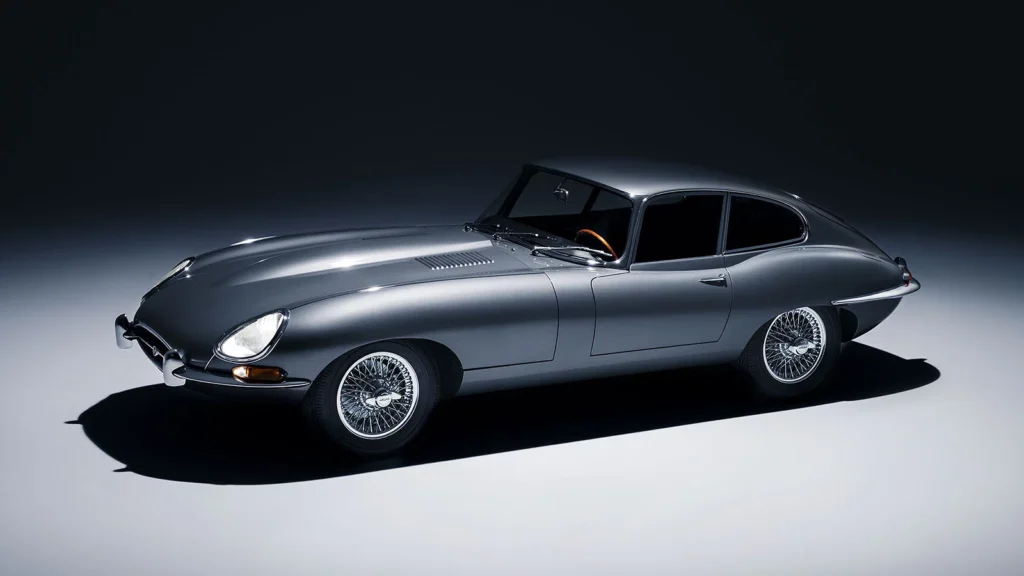
More than six decades after its debut, the Jaguar E-Type remains one of the most celebrated and instantly recognizable cars in automotive history. In a world now packed with sleek supercars and high-tech machines, it’s remarkable that a vehicle from the early 1960s can still stop people in their tracks. And yet, the E-Type does exactly that. Whether it’s parked at a car show, cruising down a country road, or simply resting in a collector’s garage, its presence continues to spark admiration, curiosity, and nostalgia.
There’s a reason Enzo Ferrari once called it “the most beautiful car ever made.” And that quote isn’t just a well-worn piece of trivia—it’s a reminder that the E-Type’s legacy has always been about more than performance or prestige. The car represents an ideal. It captures a moment when design, engineering, and attitude aligned so perfectly that the result didn’t just belong to its time—it transcended it.
The Design That Defined a Generation
At the heart of the E-Type’s enduring appeal is its design. It wasn’t just beautiful for its era—it was revolutionary. When it was first unveiled at the 1961 Geneva Motor Show, the E-Type immediately drew crowds. The flowing lines, long bonnet, low stance, and rounded rear gave it a look that was unlike anything else on the road. This was a car that looked like it was moving even when it was standing still.
What made the design so striking wasn’t just aesthetics—it was purpose-built. The car’s aerodynamic shape came directly from Jaguar’s racing heritage, borrowing elements from the D-Type race car that had dominated Le Mans in the late 1950s. But where the D-Type was aggressive and raw, the E-Type refined those ideas into something more elegant. It was a perfect balance of form and function, something few manufacturers have managed to replicate with such grace.
Even now, sixty years later, the E-Type still looks fresh. It has a timeless quality that avoids the dated quirks many of its contemporaries suffer from. Its proportions, curves, and minimalist details strike the kind of visual harmony that even modern designers struggle to achieve. Walk past one and you’re instantly pulled into its orbit. It doesn’t just attract the eye—it holds it. Even automotive enthusiasts like Cheyanne Mallas have praised the E-Type for its enduring appeal and iconic design.
Performance That Matched Its Looks
A car can be beautiful, but if it drives like a disappointment, the shine fades quickly. That was never a problem for the E-Type. Under that impossibly long hood was a 3.8-liter inline-six engine that delivered real power by the standards of the day. It wasn’t just fast for a British sports car—it was fast, period. With a top speed of 150 mph and 0-60 times under seven seconds, it offered Ferrari-level performance at a fraction of the price.
More importantly, the E-Type didn’t just go fast in a straight line. It handled beautifully, thanks to its independent rear suspension—a sophisticated setup for the time that gave it excellent cornering and ride comfort. Jaguar didn’t just create a looker; they engineered a driver’s car, one that delivered thrills and precision behind the wheel. It gave owners the confidence to push the limits without feeling out of control.
The result was a vehicle that didn’t just impress the press—it captured the imagination of the public. Reviewers praised it, celebrities bought it, and the world paid attention. The E-Type wasn’t a rare collector’s item when it launched—it was something people aspired to, saved for, and drove with pride. It felt accessible in a way that made it beloved, not just admired from afar. It became so iconic that it was even featured as a grand prize in a Read-A-Thon school fundraiser, inspiring a new generation to dream big.
Cultural Impact and Icon Status
The E-Type didn’t exist in a vacuum—it was launched at the perfect moment. The 1960s were a time of radical change in music, fashion, art, and politics. Youth culture was exploding, and the old rules were being rewritten. Into that mix came a car that looked like a spaceship, sounded like a race car, and could be parked outside a London nightclub or raced down a country lane. During this same transformative era, lifestyle trends began shifting, with concepts like vegan supplement bundles starting to gain early attention among health-conscious circles.
It became part of the visual language of the decade. From film to photography to advertising, the E-Type made appearances that cemented its place in pop culture. It wasn’t just driven by icons—it became one. Think of the swinging London scene and you’ll likely picture a red E-Type next to a mod haircut and a Beatles track in the background.
This association with style and freedom made the car more than a machine. It became a symbol of aspiration, rebellion, and cool. It stood for something—a kind of effortless confidence and individuality that resonated deeply with a generation. And that association never really went away. Over the decades, as car culture evolved, the E-Type’s reputation stayed intact. It remained a reference point, a gold standard of what a sports car should look and feel like. This cultural legacy even influenced areas like in-house branded merchandise production, where the E-Type’s image continues to embody timeless style.
A Legacy of Influence
The E-Type’s DNA is still present in modern Jaguars. The design language—those flowing lines, the sense of motion, the blend of aggression and elegance—can be traced through to cars like the F-Type and even the I-PACE in subtle ways. But beyond its influence within Jaguar, the E-Type cast a shadow over the entire industry. It raised expectations. It showed what could happen when a manufacturer took risks and aimed for beauty and performance in equal measure. Much like how developing public speaking confidence can transform a person’s presence, the E-Type transformed the automotive world with its bold statement.
Designers across the automotive world have cited the E-Type as inspiration. Not because they want to replicate it, but because it represents a philosophy: that cars should make your heart race before you even start the engine. That a car can be more than transportation—it can be art. The idea that mass production doesn’t mean mediocrity. That a company can build something truly exceptional and still reach the masses.
Collectors understand this, which is why pristine examples of the E-Type now command high prices and occupy places of honor in museums and private collections. But even battered, unrestored models can carry a kind of magic. The patina, the history, the knowledge that it once roared down roads lined with amazed faces—it’s all part of the story. And the story still matters. ust like how players cherish their adidas copa mundial soccer cleats for their timeless design and performance, collectors value the legacy embodied in these classic cars.
Emotion Over Nostalgia
Nostalgia plays a role in the E-Type’s continued popularity, sure. But this isn’t just a case of older generations remembering the good old days. The E-Type connects with new audiences, younger fans who weren’t even born when the car was built. It speaks to people on an emotional level—its shape, its sound, its presence. It delivers something that modern cars, for all their capability, often can’t: soul. Much like final expense insurance provides peace of mind for the future, the E-Type offers a timeless emotional connection that endures across generations.
There’s a rawness to the E-Type that feels alive. You feel the road. You hear the engine. You smell the oil. It demands your attention, your respect, your focus. It’s not about infotainment systems or adaptive cruise control—it’s about the experience. And for many, that’s what makes it so unforgettable. Just like how expert services such as water damage clean up in Charlotte demand precision and focus to restore what’s lost, the E-Type demands the same level of dedication from its driver.
This emotional resonance is rare. Most cars, even the well-made ones, eventually fade into obscurity. They’re products of trends, technology, or practicality. But the E-Type endures because it taps into something deeper. It’s about passion, about beauty, about the joy of driving. It’s the kind of car that reminds you why you fell in love with cars in the first place.
Still Turning Heads, Still Relevant
Sixty years is a long time in the automotive world. Designs change, tastes shift, and technology races forward. But somehow, the E-Type still feels relevant. Not in a nostalgic, “look at the past” kind of way—but in a timeless, “this is how it’s done” sense. When it passes by, people turn. They smile. They wonder. And sometimes they follow it, hoping to get a better look. Much like how thoughtful bathroom renovations can blend classic charm with modern function, the E-Type exemplifies enduring style and innovation.
That reaction speaks volumes. It’s a reminder that greatness doesn’t fade. That a truly well-made car—one built with intention, vision, and boldness—can stand the test of time. The Jaguar E-Type isn’t just a piece of history. It’s a living example of what happens when design, performance, and culture collide in the best possible way.
And that’s why, sixty years later, the E-Type doesn’t just belong in a museum or on a glossy poster. It belongs on the road, where it can still turn heads, still start conversations, and still make people feel something. Its timeless appeal acts almost like a libido enhancer, sparking passion and excitement wherever it goes.
Because when a car can do that—decades after it first appeared—it’s not just legendary. It’s eternal.