
DeLorean DMC-12: Beyond the Flux Capacitor

The DeLorean DMC-12, often simply referred to as the DeLorean, is a car that has captured the imaginations of automotive enthusiasts and pop culture aficionados alike. Most famously known for its role in the “Back to the Future” film trilogy, the DeLorean’s iconic status extends far beyond the fictional flux capacitor. This article delves into the real-world allure and legacy of the DeLorean DMC-12, exploring its history, design, performance, and cultural impact.
The Genesis of the DeLorean DMC-12
The brainchild of automotive engineer John Z. DeLorean, the DMC-12 was conceived with the ambition to revolutionize the car industry. John DeLorean, who had previously worked at General Motors and was instrumental in the creation of the Pontiac GTO, founded the DeLorean Motor Company (DMC) in 1975. His vision for the DMC-12 was to produce a sports car that was not only innovative and stylish but also accessible to a wide range of consumers.
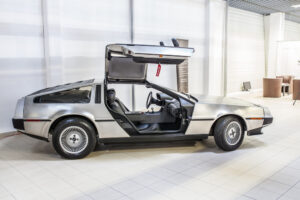
Production of the DeLorean DMC-12 began in 1981 in Dunmurry, Northern Ireland. The car was designed by Giorgetto Giugiaro of Italdesign, whose portfolio includes some of the most famous car designs in automotive history. The DeLorean’s design was groundbreaking, featuring gull-wing doors, an unpainted stainless-steel body, and a rear-engine layout. Despite its futuristic design, the DMC-12’s journey was fraught with financial troubles and production challenges.
The Design: A Stainless-Steel Marvel
One of the most distinctive features of the DeLorean DMC-12 is its stainless-steel body. Unlike most cars of its time, which were painted and prone to rust, the DeLorean’s body was left unpainted, giving it a sleek, metallic appearance that was both futuristic and durable. This decision to use stainless steel was both an aesthetic and practical choice, as it helped the car resist corrosion and maintain its unique look.
The gull-wing doors are another hallmark of the DeLorean’s design. These doors open upwards rather than outwards, providing a striking visual and practical benefit in tight parking spaces. However, they also posed engineering challenges, requiring a complex hinge mechanism and sturdy gas struts to support their weight.
Inside, the DeLorean featured a minimalist yet functional interior. The dashboard and controls were driver-focused, with ergonomics designed for a comfortable driving experience. The seats were upholstered in leather, and the car included modern amenities such as power windows and air conditioning, which were considered luxurious at the time.
Performance and Specifications
Underneath its stainless-steel exterior, the DeLorean DMC-12 housed a 2.85-liter V6 engine developed by Peugeot-Renault-Volvo (PRV). This engine was capable of producing 130 horsepower, which, while modest by modern standards, was competitive for the early 1980s sports car market. The DeLorean could accelerate from 0 to 60 miles per hour in approximately 8.8 seconds, a respectable figure for its time.
The DeLorean’s rear-engine, rear-wheel-drive layout contributed to its unique driving dynamics. This configuration provided excellent traction and stability, particularly in dry conditions. However, the car’s handling was often criticized for being less agile than its contemporaries, partly due to its weight distribution and suspension setup.
The DMC-12 also featured a five-speed manual transmission, with an optional three-speed automatic. The manual transmission was preferred by driving enthusiasts for its more engaging driving experience. The car’s brakes, a four-wheel disc setup, provided adequate stopping power, and the suspension, a double-wishbone design in the front and a multi-link setup in the rear, aimed to balance comfort and performance.
The Road to Pop Culture Immortality
While the DeLorean DMC-12 faced numerous challenges during its production run, it found an unexpected second life in Hollywood. In 1985, the car was immortalized in the film “Back to the Future,” directed by Robert Zemeckis and produced by Steven Spielberg. In the movie, the DeLorean was transformed into a time machine by the eccentric scientist Dr. Emmett Brown, played by Christopher Lloyd, and driven by the protagonist Marty McFly, played by Michael J. Fox. Just as the DeLorean became an icon of cool and innovation, finding the right men’s cool and urban shorts can elevate your style, blending comfort with a modern edge.
The decision to use the DeLorean as the time machine was driven by its futuristic design, which complemented the film’s themes of time travel and innovation. The car’s gull-wing doors and stainless-steel body made it instantly recognizable and helped it stand out on screen. The film’s success propelled the DeLorean into pop culture history, making it an icon that transcended its original automotive context.
The Legacy and Revival of the DeLorean
Despite its cinematic fame, the DeLorean Motor Company faced insurmountable financial difficulties, and production of the DMC-12 ceased in 1982 after approximately 9,000 units had been built. The company’s bankruptcy and John DeLorean’s legal troubles further clouded the car’s legacy. However, the story of the DeLorean did not end there.
In the years following its production, the DeLorean developed a cult following among car enthusiasts and collectors. Its unique design and limited production run made it a sought-after collectible, with prices steadily increasing over the decades. Enthusiast groups and clubs dedicated to preserving and celebrating the DeLorean emerged, keeping the spirit of the car alive.
In 1995, Stephen Wynne, a British entrepreneur, acquired the rights to the DeLorean Motor Company name and the remaining inventory of parts. Wynne established a new DeLorean Motor Company in Humble, Texas, and began servicing and restoring original DeLoreans. This revival included the production of new DMC-12s using a mix of original and modernized parts, allowing a new generation of enthusiasts to experience the iconic car.
Modern Interpretations and Future Prospects
The DeLorean’s influence extends beyond its original production and Hollywood fame. In recent years, there have been numerous attempts to revive and reinterpret the iconic car for the modern era. These efforts range from electric conversions to entirely new designs inspired by the original DMC-12.
One notable project is the DMC-12 EV, an electric version of the DeLorean developed by the new DeLorean Motor Company. This modern iteration retains the classic design elements of the original while incorporating a state-of-the-art electric drivetrain. The DMC-12 EV aims to provide the same iconic look and feel with the benefits of zero-emission technology, aligning with contemporary trends in the automotive industry.
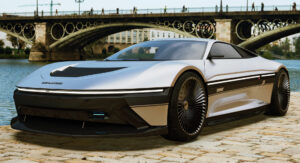
Additionally, several concept cars and design studies have been inspired by the DeLorean. These projects explore the fusion of the car’s classic aesthetics with modern technology and design principles. For example, the DeLorean Alpha5 concept, revealed in 2021, imagines what the DeLorean might look like if it were redesigned for the 21st century. Featuring sleek lines, advanced aerodynamics, and cutting-edge technology, the Alpha5 pays homage to the original while pushing the boundaries of automotive design.
Cultural Impact and Continued Fascination
The DeLorean DMC-12’s impact on popular culture cannot be overstated. Beyond its starring role in “Back to the Future,” the car has appeared in numerous other films, TV shows, music videos, and video games. Its distinctive design and association with time travel have made it a symbol of futuristic innovation and nostalgia.
The car’s enduring popularity is also evident in the numerous fan conventions, car shows, and events dedicated to celebrating the DeLorean and its legacy. Enthusiasts from around the world gather to showcase their meticulously maintained vehicles, share stories, and celebrate the unique history of the DMC-12. These events often feature appearances by cast members from “Back to the Future,” adding to the car’s mystique and appeal.
The DeLorean’s cultural significance extends to its influence on the automotive industry. The car’s design and engineering challenges have inspired generations of designers and engineers to think creatively and push the boundaries of what is possible. The DMC-12’s story is a testament to the power of innovation, perseverance, and the enduring allure of a bold vision.
Conclusion: A Timeless Icon
The DeLorean DMC-12 is much more than a car; it is a symbol of a unique moment in automotive history and a testament to the power of imagination and innovation. From its ambitious beginnings under John DeLorean to its iconic status in “Back to the Future,” the DMC-12 has captured the hearts and minds of people around the world.
Its stainless-steel body, gull-wing doors, and distinctive design make it an unforgettable piece of automotive art. Despite the financial and production challenges that plagued the DeLorean Motor Company, the DMC-12 has endured as a beloved classic, cherished by collectors and enthusiasts.
As we look to the future, the DeLorean’s legacy continues to inspire new generations of designers, engineers, and dreamers. Whether through modern electric versions, concept cars, or its ongoing presence in popular culture, the DeLorean DMC-12 remains a timeless icon that transcends the boundaries of time and technology.