
The Tesla Model S Plaid is more than just a fast electric car. It represents a fundamental shift in how performance vehicles are engineered, perceived, and experienced. When Tesla introduced the Plaid, it didn’t merely aim to outperform other electric sedans. It set its sights on the entire automotive industry, including brands that have dominated high-performance engineering for decades. What emerged was a vehicle that rewrote expectations, blending extreme speed, advanced software, and everyday usability into a single, controversial, and undeniably influential machine.
Redefining Performance in the Electric Era
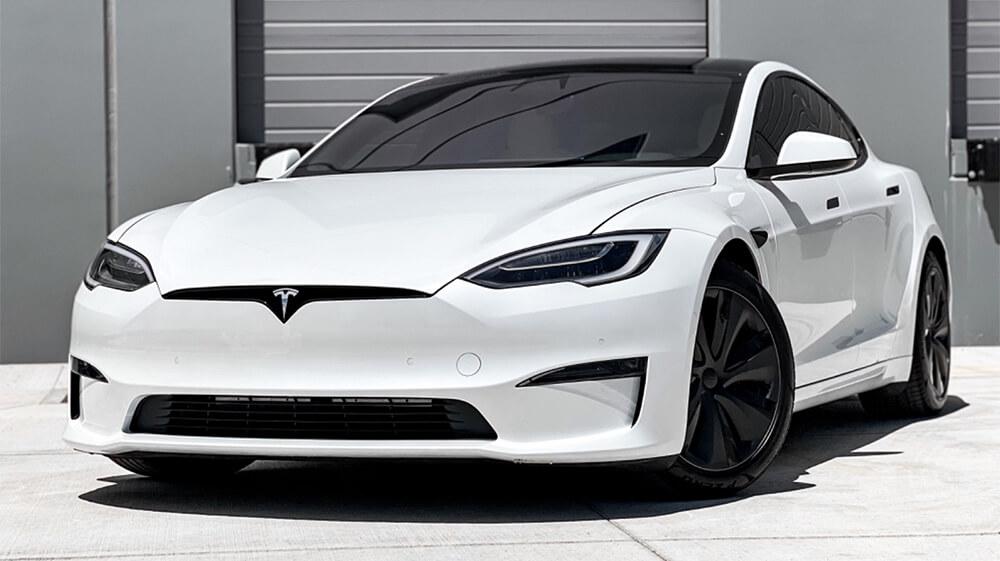
For most of automotive history, speed was defined by combustion. Horsepower figures, exhaust notes, gear changes, and mechanical aggression shaped how enthusiasts understood performance. The Tesla Model S Plaid challenged that worldview by proving that raw acceleration and sustained speed could be achieved without fuel, noise, or traditional drivetrain complexity. With acceleration figures that rival and often surpass hypercars, the Plaid forced a redefinition of what “fast” means in the modern age.
What makes this achievement remarkable is not just the numbers themselves, but how effortlessly they are delivered. The Plaid doesn’t demand perfect launches or specialized driving skills. It simply responds. Press the accelerator, and physics seems to briefly lose its grip. This immediacy is the result of years of refinement in electric motor control, battery discharge rates, and software-driven torque management, all working in seamless coordination.
The Tri-Motor Architecture That Changed Everything
At the heart of the Tesla Model S Plaid lies its revolutionary tri-motor powertrain, a configuration that marked a significant departure from Tesla’s previous dual-motor setups. By placing one motor at the front and two independently controlled motors at the rear, Tesla unlocked unprecedented levels of torque vectoring, stability, and power delivery.
Each rear motor can modulate power independently, allowing the car to distribute torque with surgical precision. This doesn’t just improve straight-line acceleration, it enhances cornering behavior and high-speed stability. The result is a large luxury sedan that feels planted and responsive in situations where its size would normally be a disadvantage.
The motors themselves use carbon-sleeved rotors, a design innovation that allows them to spin at extremely high speeds without structural failure. This seemingly small engineering decision has massive implications, enabling higher peak power output while maintaining reliability under intense loads. It’s one of those technical breakthroughs that doesn’t grab headlines but fundamentally enables the Plaid’s performance dominance.
Battery Engineering and Thermal Mastery
Power is meaningless without control, and nowhere is that more evident than in the Plaid’s battery system. Delivering extreme acceleration requires enormous bursts of energy, and managing that energy safely and repeatedly is one of the hardest challenges in EV engineering. Tesla approached this problem with a combination of battery chemistry optimization, advanced cooling systems, and real-time thermal management software.
The Model S Plaid’s battery pack is designed to maintain optimal temperature even under repeated high-performance use. A sophisticated heat pump system routes thermal energy where it’s needed, whether that’s cooling the battery during aggressive driving or warming it to ensure peak output before a launch. This allows the Plaid to deliver consistent performance rather than brief bursts followed by power reduction.
What’s especially notable is how invisible this complexity is to the driver. There are no manual adjustments or performance modes that require technical understanding. The car continuously monitors itself, adapting in real time. This reflects Tesla’s broader philosophy that advanced engineering should feel effortless, not intimidating.
Software as the Silent Performance Partner
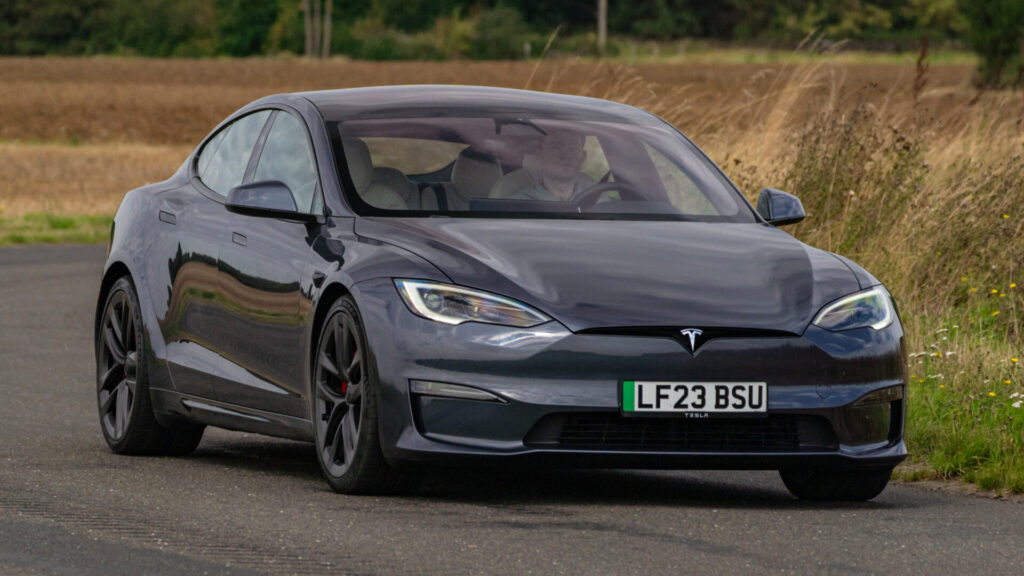
In the Tesla Model S Plaid, software is not a supporting feature. It is a core component of the vehicle’s performance identity. Every aspect of acceleration, traction, suspension behavior, and power delivery is governed by code that is constantly refined through over-the-air updates.
This means the Plaid you buy today is not the same Plaid you’ll be driving a year from now. Tesla has already demonstrated its ability to improve acceleration times, refine traction control, and enhance stability through software alone. In traditional performance cars, such improvements would require mechanical modifications or entirely new model years.
The integration between hardware and software allows Tesla to push boundaries that would be risky or impossible for manufacturers relying solely on mechanical solutions. Torque distribution, motor synchronization, and even regenerative braking behavior are optimized thousands of times per second, creating a driving experience that feels both explosive and controlled.
Aerodynamics and High-Speed Stability
Achieving world-class acceleration is only part of the challenge. Maintaining stability at high speeds requires careful aerodynamic design, especially in a vehicle as large and heavy as the Model S. Tesla approached aerodynamics with an obsessive focus on efficiency, resulting in a shape that minimizes drag while still generating sufficient downforce.
The Plaid’s low drag coefficient is not just about extending range. It plays a crucial role in allowing the car to continue accelerating at speeds where aerodynamic resistance becomes the dominant force. Subtle design elements, such as the front fascia, rear diffuser, and underbody airflow management, all contribute to a sense of calm and control even at extreme velocities.
This is where the Plaid separates itself from traditional muscle cars. Instead of fighting air resistance with brute force, it slices through it, using physics to its advantage rather than overpowering it.
Braking, Suspension, and the Reality of Control
Speed is thrilling, but control is what makes performance sustainable. Tesla equipped the Model S Plaid with an adaptive air suspension system designed to balance comfort and capability. In everyday driving, it absorbs imperfections with ease, preserving the luxury sedan experience. Under aggressive conditions, it lowers the ride height and stiffens responses to improve handling and stability.
Braking has been a point of debate, particularly among track-focused enthusiasts. While the Plaid’s standard braking system is more than adequate for street use, Tesla acknowledged the demands of high-performance driving by offering a track-focused upgrade package. This transparency reflects the company’s evolving understanding of what performance customers expect beyond straight-line speed.
What remains impressive is how composed the Plaid feels during rapid transitions. Despite its weight, it resists body roll and maintains composure, a testament to the effectiveness of its chassis tuning and torque vectoring systems.
A New Kind of Driver Experience
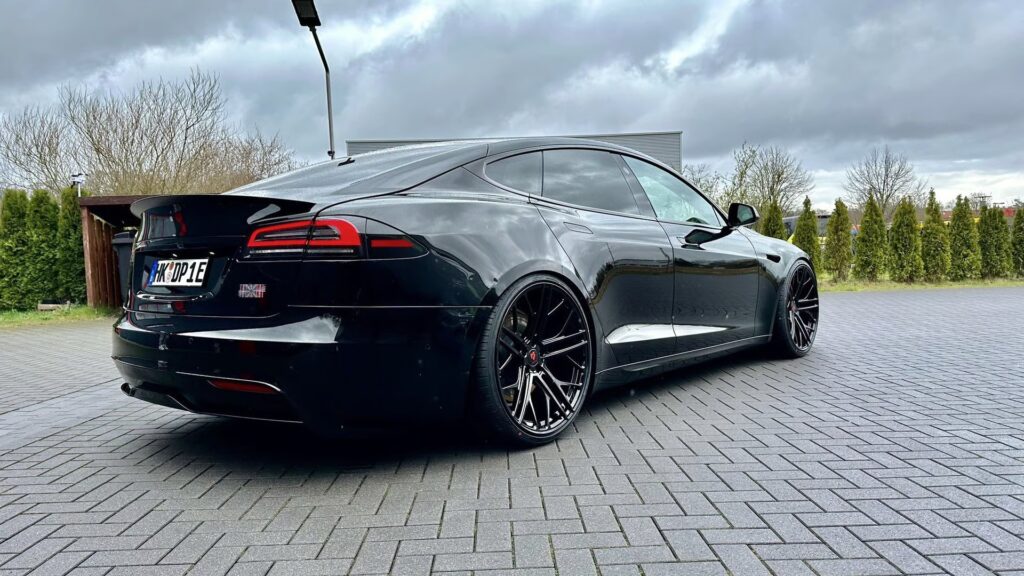
Inside the Tesla Model S Plaid, the performance story continues in unexpected ways. The minimalist interior, dominated by a central touchscreen, removes distractions rather than adding them. Controls that once required physical switches are now integrated into intuitive digital interfaces.
The controversial yoke steering wheel symbolizes Tesla’s willingness to challenge conventions. While not universally loved, it underscores a broader point: the Plaid is not trying to replicate the past. It’s attempting to redefine how a high-performance car feels, looks, and operates.
Acceleration in the Plaid doesn’t come with drama in the traditional sense. There’s no engine roar, no gear changes, no vibration. Instead, there’s a surreal, almost silent surge that can feel unreal at first. This emotional shift is part of what makes the Plaid such a polarizing and fascinating vehicle.
Why the Plaid Matters Beyond the Numbers
The Tesla Model S Plaid is not just fast for an electric car. It’s fast by any standard ever applied to production vehicles. But its true significance lies in what it represents for the future of automotive engineering.
By proving that software-driven electric platforms can outperform decades of combustion-based innovation, Tesla has forced competitors to rethink their priorities. Performance is no longer limited by mechanical complexity or fuel delivery. It is increasingly defined by data, algorithms, and electrical efficiency.
The Plaid also challenges the notion that extreme performance must come at the expense of practicality. It seats five adults comfortably, offers ample cargo space, and can be driven daily without compromise. This duality is something traditional supercars have never truly achieved.
The Legacy of the World’s Fastest Production Sedan
Engineering the world’s fastest production sedan was never just about winning a numbers game. For Tesla, the Model S Plaid serves as a statement of intent. It demonstrates what is possible when engineering disciplines converge, when software and hardware are designed together, and when convention is treated as a starting point rather than a limitation.
The Plaid will eventually be surpassed. Faster cars will come, electric and otherwise. But its role as a turning point in automotive history is secure. It showed that the future of performance is not loud, mechanical, or exclusive. It is precise, intelligent, and shockingly accessible.
In doing so, the Tesla Model S Plaid didn’t just become the world’s fastest production sedan. It became a symbol of an industry in transition, and a glimpse into a future where engineering brilliance is measured not only by speed, but by how seamlessly that speed integrates into everyday life.