
The Shift From Driving Skill to System Supervision
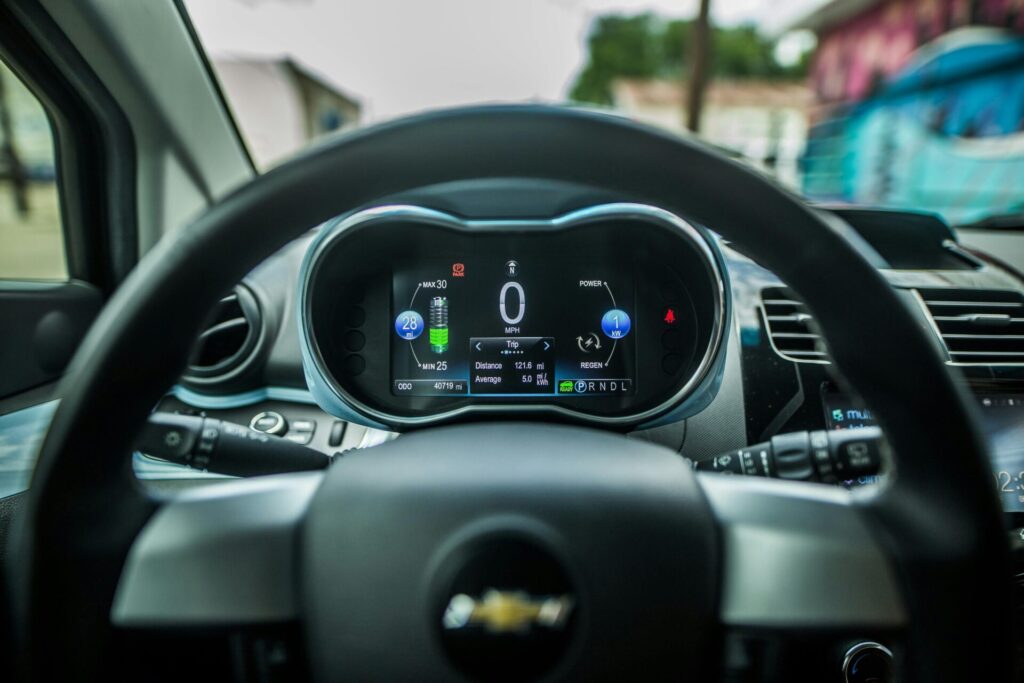
The automotive landscape is undergoing a profound transformation. For more than a century, driving skill—mastery over steering, braking, acceleration, and situational awareness—was the defining measure of a driver’s competence. Being a skilled driver meant navigating complex traffic patterns, responding instinctively to hazards, and making split-second decisions that could determine safety and efficiency. Yet the emergence of advanced driver-assistance systems (ADAS) and autonomous vehicle technologies has begun to shift this paradigm. The core competency of drivers is gradually transitioning from manual control to system supervision, where understanding, monitoring, and interacting with automated systems becomes more important than traditional mechanical dexterity.
This shift is not merely technological; it carries social, psychological, and regulatory implications. As vehicles increasingly manage aspects of speed, lane positioning, obstacle detection, and emergency braking, human drivers are moving into a supervisory role. The driver’s attention must be divided between trusting the system and being prepared to intervene if automation fails. This new responsibility is qualitatively different from conventional driving: it emphasizes situational awareness, decision-making, and understanding system limitations over physical maneuvering. The transition is further complicated by human factors, including overreliance on automation, complacency, and variable trust in technology.Adapting to this role is much like relying on winter apparel in harsh conditions, where trust in protective systems must be balanced with awareness, readiness, and an understanding of their limits.
Understanding this shift requires examining how driver roles are changing, the capabilities and limitations of autonomous systems, the cognitive and ethical challenges of supervision, and the broader implications for driver training, law, and public safety. It is a shift that is simultaneously incremental and revolutionary, blending human intuition with algorithmic precision in ways that redefine what it means to “drive.”
From Manual Mastery to Supervisory Control
For decades, driving skill was evaluated through the lens of mechanical competence. Drivers were expected to maintain control over every aspect of vehicle operation, from steering and speed regulation to braking in emergencies. Expertise was honed through experience, and the consequences of mistakes were immediate and visible. Roads, weather conditions, and traffic patterns demanded continuous active engagement. The better a driver could anticipate, react, and execute, the safer and more efficient their performance.
Today, the landscape has changed. Modern vehicles are equipped with systems capable of adaptive cruise control, lane centering, automated braking, and even partial highway automation. In these contexts, manual control is no longer required at every moment. A driver may keep their hands on the wheel and eyes on the road while the vehicle maintains a safe distance from surrounding cars, keeps within lane boundaries, and alerts the driver to potential hazards. The traditional markers of skill—precise steering, smooth acceleration, split-second braking—are increasingly supplemented or replaced by system-managed processes.
Supervisory control involves monitoring automated functions, understanding system behavior, and responding when automation signals intervention. This role is qualitatively different from direct driving. While traditional skill relied on physical coordination, supervisory skill emphasizes cognitive awareness. Drivers must interpret system status indicators, understand alerts, and anticipate scenarios where technology might fail. A lane-keeping system may operate flawlessly in clear conditions, but when confronted with construction zones, faded lane markings, or unusual road geometry, human judgment becomes critical. The driver’s responsibility shifts from executing maneuvers to verifying the system’s actions and making corrective decisions if necessary.
Furthermore, supervisory control demands a new form of attentional flexibility. Drivers must balance periods of low activity, where the system handles routine operations, with high-alert interventions during unexpected situations. This intermittent engagement challenges conventional notions of skill, requiring the development of a new cognitive expertise that blends monitoring, judgment, and rapid intervention. Driving is becoming less about doing and more about overseeing, a role that may feel familiar in principle but unfamiliar in practice.
Cognitive Challenges in Supervising Automated Systems
The transition from manual control to system supervision introduces significant cognitive challenges. Human attention and perception are not naturally optimized for long periods of passive monitoring, which is often required in vehicles equipped with semi-autonomous features. One of the primary risks is complacency, where the driver’s mind may drift due to low demand, leading to delayed responses when intervention becomes necessary.
This phenomenon, known in psychology as the “vigilance decrement,” occurs when humans are required to observe a system for extended periods without active engagement. Even experienced drivers can become distracted, misinterpret alerts, or fail to notice subtle cues that the automation is struggling. Unlike traditional driving, where continuous physical action keeps the driver mentally engaged, supervisory roles often involve periods of monotony punctuated by sudden critical demands. The unpredictability of system failures makes this cognitive load particularly challenging.
Trust in automation also complicates supervisory performance. Overreliance can lead drivers to abdicate responsibility, assuming the system will handle all scenarios flawlessly, while underreliance can result in unnecessary interventions that reduce efficiency or even create new hazards. Finding the right balance between trust and vigilance is central to effective supervision. Drivers must develop an understanding of what their vehicle can and cannot do under various conditions, which may involve studying manuals, training modules, or experiential learning.
Alert design and human-machine interface play a crucial role in mitigating cognitive risks. Systems must communicate their operational status, limitations, and imminent failures in a way that is intuitive and immediately actionable. Too many alerts can overwhelm and confuse the driver, while too few can leave them unprepared. Effective design must support situational awareness, enabling the human supervisor to make rapid, informed decisions when automation falters. The cognitive challenge is not just passive attention, but active interpretation and timely intervention, making the human role both crucial and cognitively demanding despite appearing less physically involved.
Ethical and Safety Considerations in a Supervisory Paradigm
The shift to supervisory driving raises complex ethical and safety questions. As humans transition from hands-on operators to overseers of autonomous systems, responsibility for accidents becomes more ambiguous. When a semi-autonomous vehicle is involved in a collision, determining whether the fault lies with the human, the system, or both is increasingly challenging, both legally and morally.
Ethically, drivers face dilemmas around decision-making under partial automation. If a system cannot avoid an accident, does the human supervisor intervene to minimize harm, even at personal risk? How should liability be allocated if a driver fails to respond in time, despite trusting the system in good faith? These questions complicate traditional traffic laws, which assume continuous human control and direct responsibility. Regulators are now grappling with frameworks that balance accountability, safety, and technological innovation.
Safety outcomes also depend on proper training. Supervisory skills cannot be assumed; they must be taught and reinforced. Drivers need to understand system behaviors, recognize limitations, and practice emergency interventions. Yet existing driver education programs are primarily geared toward manual skills rather than automated oversight. Integrating these new competencies into licensing and safety curricula is a critical challenge, as underprepared supervisors may inadvertently increase risk.
The ethical dimension extends to design decisions. Engineers must balance automation with opportunities for human oversight, ensuring that systems do not encourage passivity or provide false confidence. For instance, overaggressive lane-centering might reduce minor deviations but could induce overtrust, while overly sensitive alerts may create nuisance warnings that drivers ignore. The interplay between technology and human judgment becomes a shared responsibility, making system design and user training inseparable components of ethical automotive practice.
Redefining the Concept of Driving Skill
Ultimately, the rise of automation is redefining what it means to be a skilled driver. Driving skill is no longer measured solely by dexterity, reflexes, or experience behind the wheel. Instead, it increasingly includes cognitive proficiency, system literacy, risk assessment, and the ability to intervene appropriately when technology fails. Traditional physical skills remain relevant, particularly in situations where manual control is required, but the emphasis is shifting toward oversight, decision-making, and human-machine collaboration.
This redefinition challenges long-standing cultural notions of what it means to “drive well.” Pride, identity, and expertise have historically been tied to physical control and road mastery. As technology mediates more of the driving experience, competence becomes more abstract, less visible, and perhaps less intuitively understood by the public. Nevertheless, the human role remains indispensable. No system is currently capable of handling every scenario flawlessly, and human judgment is still essential for ensuring safety, adapting to unpredictable conditions, and making ethical decisions in moments of crisis.
The shift also has implications for vehicle design, policy, and insurance. Cars will increasingly be conceived as collaborative systems, where human and machine share responsibility. Standards for safety, liability, and training will need to evolve in parallel. Driving will become less about manual skill and more about thoughtful supervision, proactive engagement, and informed trust, marking a fundamental change in the relationship between humans and automobiles.
In conclusion, the transition from traditional driving skill to system supervision represents both an opportunity and a challenge. It promises increased safety, efficiency, and convenience, but it also demands new cognitive skills, ethical considerations, and training paradigms. As vehicles become more autonomous, the human role as supervisor will define the next era of driving, blending experience, judgment, and technological literacy into a reimagined form of expertise that is just as critical as manual control once was. The road ahead is one where humans and machines share responsibility, and success will depend on embracing this new balance rather than clinging solely to the skills of the past.